Flutter echo: what it is and how it affects the acoustics of rooms

If you want to achieve spectral balance and ensure high-quality sound of music and other audio compositions in the room, then you definitely need to know about flutter echo.
Regardless of what kind of room you are trying to improve and modernize, be it a recording studio or even residential real estate, organizing the space will depend on several factors. One of them is flutter echo.
What is it?
Flutter echo is the energy trapped between two surfaces and the angle at which the generated sound enters between them. In simple terms, in a normal room, this happens between the device that generates sound energy, the speaker, and the wall. Depending on the length of the sound waves, the energy is trapped between two surfaces located parallel to each other.
As a result of this effect, a series of reflections are formed, characterized by short-time signatures. Next, they are converted into energy that moves along the surface area between the points. The corresponding movement of sound energy leads to excitation of the air between the designated surfaces, which is why we hear distortions. Such distortions can appear between walls and other interior elements, including shelves, cabinets, etc.
If your goal is to accentize spectral balance, then you need to understand what a flutter echo is and how to deal with it correctly.
For a visual example, conduct a simple experiment. In a small, empty room, clap your hands or make a loud call using a cell phone. In this case, you will hear an example of a flutter echo. These are abrupt repetitions that will acoustically stand out from your hands or cell phones from the resulting diffuse reverberation and become clearly distinguishable.
With closely spaced surfaces, a series of repetitions can take on a tonal character. It provokes serious acoustic problems and can be very annoying. For example, if you are in a control room and making audio recordings, it is almost impossible to measure these echo signals technically. But there is another solution—to determine the most problematic frequencies, taking into account the speed of sound and the distance between the surfaces.
We have already answered the main question - what is spectral balance. Now we should move on to other equally important topics. For example, talk about simple diffusion, and also learn some important details related to high frequency energy.
The problem of high and medium frequencies
In the context of the fluttering echo, it is imperative to dwell on the issue of medium and high frequencies. After all, the effect in question is a problem of these types of frequencies. As for low-frequency energy, it has long pressure waves. And they are not delayed in small sizes, but pass through them.
As for high-frequency and medium-frequency energy, their length is shorter and delays occur in areas 3, 4, 5. This energy becomes clearly noticeable at high and medium frequencies. This is due to the fact that it is in the middle ranges that our hearing perceives voices, as well as various types of musical content.
Fluttering echo and control rooms
Understanding what is high frequency energy and what is the main feature of the fluttering echo, we should move on to the issue of the work of control rooms. Here it is important to be extremely careful with the problems of this effect.
For each sound engineer, it is important to hear the music and head in the audio recording as well as possible, and not to encounter problems with the fluttering echo. Otherwise, the sound will be sharp and tiny. For this, special solutions are used in control rooms to combat the fluttering echo - absorption and diffusion.
Therefore, it will be logical to find out what is diffusion and how the absorption definition relates to the fluttering echo. The main thing here is not to confuse the meanings of absorption vs adsorption.
Absorption serves to reduce the strength of the echo. Stable diffusion and unstable diffusion have the role of minimizing the reflected energy. As a result, it is possible to achieve the main goal - spectral balance. That is, it makes the presentation of all frequencies in the room uniform.
Why Reverb Matters
Since your goal may be high frequency music for positive energy, then the issue of space organization should always be considered comprehensively. In addition to the flutter echo, the reverberation time is important. It is because many rooms are made using plasterboard. Under such conditions and without proper space treatment, reverberation provokes the appearance of noise. As for the flutter echo, it also creates excess noise received from the walls, floor, and ceilings, forming distortions.
Why you should contact UA Acoustics
As you already understand, the flutter echo is a multiple reflection of sound that passes between parallel surfaces. In fact, it can be imagined as a reflection in two mirrors placed opposite each other. Due to this effect, a hard, unpleasant, metallic sound appears at high and mid frequencies.
Considering the diffusion definition, the importance of absorption, and the effect of the flutter echo on room sound quality, it is important to find effective solutions to combat this common and undesirable phenomenon. Designing the room correctly from the beginning is not always possible.
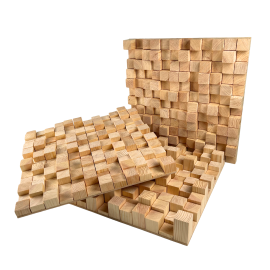
In fact, it is pretty easy to fight this echo. Especially if you contact UA Acoustics. The main task is to place unique materials on plane-parallel surfaces with sound absorption properties. For example, special panels or acoustic diffusers. We are ready to offer you the highest quality and most effective sound-absorbing materials. Additionally, our experts recommend placing non-parallel cladding on the side walls. It will also allow you to get rid of the fluttering echo..jpg)
.jpg)