Early reflection points: what are they and how to find them

If you want to achieve excellent sound and a stunning acoustic effect in a small room or even in a concert hall, it is very important to learn and understand the details of a concept called early reflections. After all, when we turn on music, we hear more than just recorded signals. In fact, this is a complete combination of audio sound from the original source and the original sounds from the room itself.
Sound waves "hit and bounce" off different surfaces that surround us in rooms. These surfaces are walls, ceilings, floors, furniture, and other objects. Then, they return to them through the so-called late and early reflections reverb. These special reflections are a natural phenomenon, but they only sometimes benefit the quality of acoustics and different sound perception.
UA Acoustics specialists have prepared a detailed review for you. Here, you will detail learn about main question: what is early reflections reverb and their features, and we will also tell you about easy methods to find them using improvised means and specialized software. It will allow you to select all the necessary components, including acoustic panels, to improve the sound in any room.
All you need to know about reflections
First of all, we need to understand the main question - what are early reflections in reverb. When we turn on music, our hearing begins to perceive everything that the musicians managed to record or reproduce with the help of instruments, as well as the different sound of the room itself. Any sound is a combination of voices and sounds that come from your speakers, as well as responses from the surrounding space - furniture, walls, and also both ceiling, floor, etc.
Usually, in addition to early reflections acoustics, we hear several components.
Direct signals. They come directly from the original source, which can be an audio system or live musicians and their instruments;
Early reflections. They bounce off those surfaces that are closest;
Late reflections. It can be described as a kind of echo of lagging sounds, a combination of many signals that we perceive as reverberation. This helps us understand the difference between early reflections vs. late reflections and draw the appropriate conclusions.
It gives a logical answer to the primary question of what is early reflections reverb. These are the very first or early reflections. It is the first reaction of the room acoustics where we are located to the signals and sounds coming from the audio source. The time of their appearance is 20-80 ms from the moment the direct signal reaches our ears.
It may seem to many that reverb early reflections have an extremely negative effect on our acoustic perception of sounds. But in fact, with their help we can perceive sounds, understand them and feel the size of the hall.
The importance of monitoring
You already understand what are early reflections in acoustics, so the next question arises - why control and find them? The whole point is that when listening to musical compositions, the correctness of their perception directly depends on the settings of the audio system. It must be adapted to the space's size, shape, acoustic characteristics and features of the instruments and also performers.
Although early and late reflections are essential, the first one should be addressed to achieve the best possible sound quality. Otherwise, you or the audience in your room will hear acoustic distortions, which will negatively affect the overall perception of music. In simple terms, finding and correcting early sound reflections is required to ensure better sound source quality.
Simple Search Methods
Since we have already figured out the early reflections definition, we can now talk in more detail about the features of the search. Depending on which method you will use to improve acoustics and enhance the quality of the sounds:
mirror;
laser pointer;
sheets of paper;
roulette;
microphone;
specialized software.
If you do not have the experience or ability to use software, then arm yourself with a mirror or laser.
Mirror method
One of the simplest and most popular methods for finding early reflections acoustics involves the use of a regular mirror. You will also need an assistant:
place yourself at the listening point (chair, sofa, chair, etc.);
ask the assistant to bring the mirror to different surfaces in turn;
move the mirror along the surfaces;
sitting at the listening point, control the positions when the acoustic system appears in the mirror.
The zones where you saw the sound speakers in the mirror reflection from your place will be the desired points.
Laser pointer method
Another method involves using a regular laser pointer. You need to direct the laser beam from the speaker so that when it is reflected, it reaches the expected service point, which is where the early reflection point will be located.
Software
This is a more modern and highly accurate method for finding early reflections. For this, you will need a measuring microphone and specialized software. You will need to connect the microphone in the center of the listening area, turn on the audio recording, and measure the indicators using the program. Then, all that remains is to analyze the graphs and impulse responses. The peaks after the direct audio signal will be your necessary points. The delay time will indicate the distance to which they should be located.
How to improve sound quality
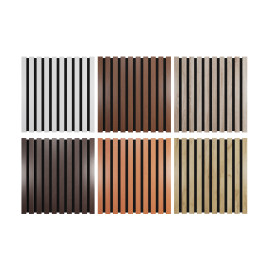
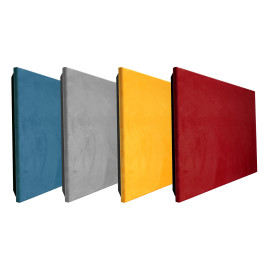
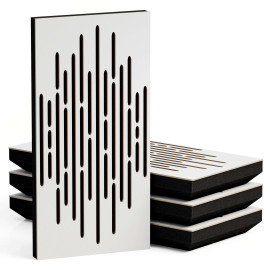
If you manage to understand the issue of early reflections acoustics and determine the position of the corresponding points, then specialized solutions should now be installed in these areas. These can be acoustic panels, diffusers, and also sound-absorbing elements.
UA Acoustics specialists are ready to offer you all the necessary acoustic products, panels, and other solutions to eliminate the problem of poor sound in a home theater, professional recording studio, and any other premises. Our specialists can also help with identifying these points and professionally prepare a studio or room for the highest quality sound..jpg)